
Pests and Diseases
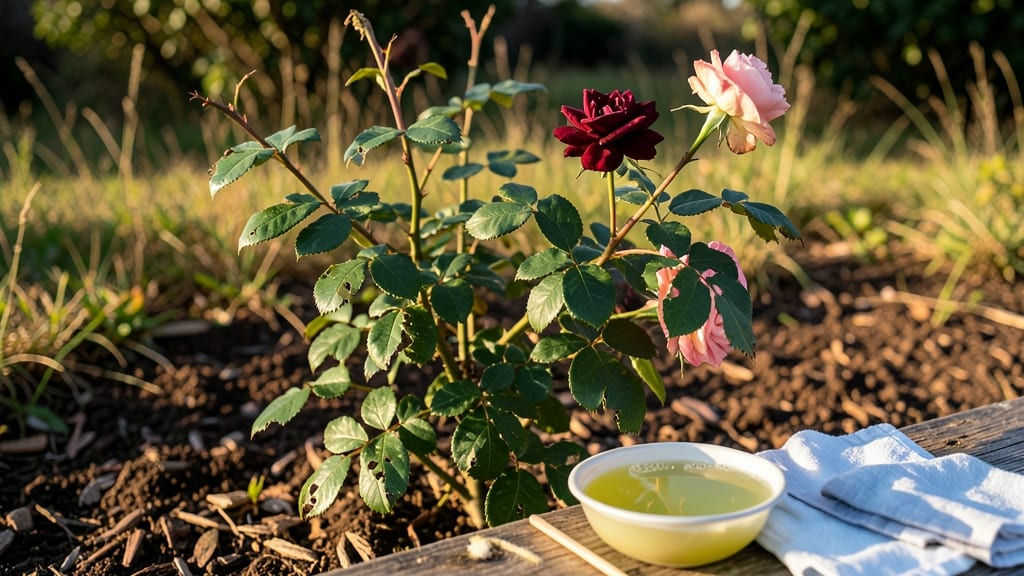
A simple home remedy for holes in rose leaves is neem oil spray—the organic solution that banishes chewing pests and fungal invaders in just one application. 🌿 I’ve seen Japanese beetles, slugs, and even fungal invaders retreat after just one application, leaving roses lush and damage-free.
The key is acting fast before the pests skeletonize your blooms.
Most people assume holes mean Japanese beetles, but slugs, lacewings, and even fungal leaf spots can create similar damage. Neem oil works against all three because it disrupts pests’ life cycles while strengthening plant defenses.
You’ll need 1 tablespoon of neem oil, 1 teaspoon of mild liquid soap, and 1 quart of water—mix it up, spray it on, and watch the pests vanish within 24-48 hours.
After treatment, your roses will bounce back with vibrant new foliage within weeks. The neem oil also prevents future infestations, so you won’t need harsh chemicals again. Plus, it’s safe for bees and other pollinators once fully dried—just apply in the early morning or evening when they’re less active.
This remedy works for backyard gardens, container roses, and even community garden plots. The only real requirement? Consistency. Reapply every 7-10 days until the problem clears, and your roses will thank you with bold blooms all season long.
Root Causes of Leaf Damage
Understanding why your rose leaves develop holes is the first step to fixing the problem—because not all damage comes from the same source! 🌿🐛 Whether it’s tiny chew marks or larger, irregular tears, the culprit is usually one of these common factors.
Let’s break down the science behind each cause so you can identify the issue and act fast.
Pests are the #1 reason for holes in rose leaves, and they don’t just stop at leaves—they can weaken your entire plant. Here’s how they strike:
- Japanese Beetles 🐞: These metallic-green invaders are voracious feeders. Adult beetles skeletonize leaves by chewing between the veins, leaving a lacy, holey mess. Their larvae (white grubs) also munch on roots, further stressing the plant. - Why it happens: They’re attracted to roses’ sweet nectar and soft tissue.
A single beetle can devour entire leaves in hours!
- Rose Slugs (Sawfly Larvae) 🐛: These gray, translucent caterpillars (yes, they’re not true slugs!) roll up leaves and chew them from the inside out, creating shotgun-like holes. - Why it happens: Females lay eggs on new rose growth, and larvae emerge hungry.
They thrive in humid, shady conditions.
- Aphids & Spider Mites 🕷️: While they rarely create large holes, clusters of these tiny pests can cause stippling (tiny dots) that weaken leaves, making them susceptible to tearing later.
- Why it happens: They suck sap, leaving leaves brittle and prone to damage from wind or handling.
- Caterpillars (Tobacco Hornworms, Loopers) 🐛: Large, green caterpillars (like the tobacco hornworm) can devour leaves overnight, leaving behind jagged, uneven holes.
- Why it happens: They’re drawn to roses’ foliage for food and often hide on the undersides of leaves during the day.
Pro Tip: 🔍 Check the undersides of leaves and look for:
- Tiny eggs or frass (insect droppings).
- Chewed edges vs. clean, punched-out holes (aphids vs. beetles).
- Webbing or silk trails (signs of caterpillars).
While fungi and bacteria don’t directly punch holes, they create weak spots that make leaves vulnerable to tearing. Here’s how:
- Black Spot Disease 🍄: Caused by the fungus Diplocarpon rosae, this disease creates dark, circular lesions with yellow halos.
As spots expand, leaves become fragile and tear easily. - Why it happens: Fungal spores thrive in wet, humid conditions (like morning dew) and spread via water splashes or infected tools.
- Powdery Mildew ❄️: A white, powdery coating on leaves blocks sunlight, weakening tissue. Infected leaves often crisp and tear when touched.
- Why it happens: Poor air circulation and high humidity (60%+) create the perfect breeding ground.
- Bacterial Leaf Spot 🦠: Tiny, water-soaked spots (often with a yellow border) can merge and cause leaves to shred when handled.
- Why it happens: Bacteria like Xanthomonas spread via rain, overhead watering, or contaminated pruners.
Pro Tip: 🌡️ If holes appear after a rainy spell or in shaded areas, fungal/bacterial damage is likely. Test by gently tugging a leaf—if it tears like paper, it’s weak from infection.
Sometimes, holes aren’t caused by pests or disease—but by physical stress that makes leaves brittle. Here’s how:
- Wind & Hail Damage 🌪️: Strong gusts or hail can puncture leaves, creating irregular holes. Roses with thin, new growth are most vulnerable.
- Why it happens: Leaves lack the tough, waxy coating of mature foliage, making them prone to tearing.
- Overwatering or Poor Drainage 💦: Waterlogged soil leads to root rot, starving leaves of nutrients. Weakened leaves become easily damaged by even gentle brushing.
- Why it happens: Roots can’t absorb water or oxygen, causing cell death in leaves.
- Nutrient Deficiencies 🌱: A lack of nitrogen, magnesium, or calcium makes leaves thin and weak. Holes may appear after physical stress (like wind) because the tissue can’t withstand pressure.
- Why it happens: Over-fertilizing with only phosphorus/potassium (no nitrogen) or compacted soil blocks nutrient uptake.
Pro Tip: 💡 Check the soil—if it’s soggy or smells like rot, drainage is the issue. Yellowing between veins? It’s likely a magnesium deficiency (fix with Epsom salt).
Not all holes are from pests or disease—sometimes, it’s human (or pet) error:
- Pruning Gone Wrong ✂️: Snipping too close to stems or using dull shears can crush leaves, creating ragged tears.
- Why it happens: Sharp blades are a must—dull tools cause more damage than clean cuts.
- Animal Activity 🐶🐱: Curious pets, rabbits, or deer might nibble on leaves, leaving behind uneven holes.
- Why it happens: Roses are soft and tasty to herbivores!
- Mechanical Injury 👆: Rough handling (like brushing against leaves) can tear weak or diseased foliage.
- Why it happens: Healthy leaves are resilient, but stressed ones shatter easily.
Pro Tip: 🚫 If holes look random and uneven, review recent activity near your roses. Protect young plants with row covers if pests are a recurring issue.
Quick Fixes for Chewed Rose Leaves
Now that you know what’s nibbling on your roses, it’s time to act! These practical, plant-friendly solutions will help you restore your roses to their lush, hole-free glory—without breaking the bank or harming the environment.
Below, we’ve matched common causes to effective remedies, plus prevention tips to keep your roses thriving long-term.
If tiny holes, jagged edges, or skeletonized leaves are your problem, insects are likely the culprits. Here’s how to evict them for good:
🔥 Treat Aphids & Spider Mites (Tiny Holes, Sticky Residue)
Aphids and mites are sneaky sap-suckers that leave behind tiny holes, yellowing leaves, and webbing. They multiply fast, so act within 24–48 hours for the best results.
- 🍳 Homemade Neem Oil Spray (Best for All Stages) Neem oil is a powerhouse against soft-bodied pests like aphids and mites.
It disrupts their life cycle while being pet-safe (once dry). Recipe: - 1 tbsp neem oil (100% cold-pressed) - 1 tsp dish soap (mild, like Castile) - 1 quart lukewarm water - 1 tsp honey or sugar (optional, to attract beneficial insects later) Steps: 1.
Mix ingredients in a spray bottle until fully dissolved. 2. Shake well before each use (neem oil separates). 3. Spray undersides of leaves (where pests hide) and stems early morning or late evening (avoids burning leaves in sun). 4. Reapply every 5–7 days until pests vanish.
- 👨🍳 DIY Soap Spray (Emergency Fix) For a quick knockdown, use insecticidal soap. It’s fast but less residual than neem. Recipe: - 1 tbsp Castile soap (or mild liquid dish soap) - 1 quart water Steps: 1.
Spray directly on pests (they’ll drop off within minutes). 2. Repeat every 3–4 days until gone.
- 🌿 Ladybugs & Lacewings (Natural Predators) Pro Tip: 💡 Invite beneficial insects to do the work for you! Buy ladybug eggs or lacewing larvae online or from garden centers. Release them at dusk when pests are active.
🦋 Japanese Beetles? Crush Them Before They Multiply
These metallic green/black beetles devour leaves in minutes, leaving large, irregular holes. They’re worst in summer heat.
- 🔪 Handpick & Drown (Most Effective) Morning or evening, fill a bucket with soapy water and:
- Shake roses gently to dislodge beetles.
- Drop them into the bucket (they’ll drown instantly).
- Check daily—they’re most active in early morning.
- 🥘 Beer Trap (Lure & Trap) Japanese beetles are drawn to fermenting smells. Set up a trap:
- Fill a jar or cup with beer or apple cider vinegar.
- Bury it neck-deep in soil near roses.
- Empty and refill every 2–3 days.
- 🌡️ Milky Spore (Long-Term Prevention) This natural bacteria targets Japanese beetle grubs in the soil. Apply it once in spring—it spreads over time and reduces beetle populations by 80%.
🕷️ Slugs & Snails? Barrier Them Out
If holes have silver slime trails or irregular edges, slugs or snails are the culprits. They’re nighttime raiders and thrive in damp, shaded areas.
- 🛡️ Copper Barrier (No-Chem Solution) Slugs hate copper—it gives them a mild electric shock.
Install: - Copper tape around pots or garden beds. - Copper wire bent into a ring around plants. Pro Tip: 🔥 Combine with diatomaceous earth (food-grade) in a 1-inch band around the base—it dehydrates them.
- 🥘 Beer Trap (Again!) Yes, beer works for slugs too! Bury a shallow dish filled with beer near the plant. Slugs crawl in and drown overnight.
- 🌿 Coffee Grounds & Eggshells Sprinkle used coffee grounds or crushed eggshells around the base—slugs avoid the texture.
If holes appear without pests (e.g., brown edges, no webbing, or fungal spots), the issue might be environmental stress or pathogens.
🌡️ Overwatering or Fungal Issues (Black Spots, Holes with Fuzzy Growth)
- ⏰ Adjust Watering Roses hate soggy roots.
Water deeply 2–3 times per week (early morning) and avoid overhead spraying. - 🍄 Baking Soda Fungicide (Prevents Powdery Mildew) Mix 1 tbsp baking soda + 1 tsp oil + 1 quart water + a drop of soap. Spray every 7–10 days to prevent fungal spread.
🔥 Sunburn or Wind Damage (Dry, Crispy Holes)
- 🌿 Provide Shade Cloth If new growth has brown, papery holes, your roses may be sun-scorched.
Use 30–50% shade cloth on hot afternoons. - 💧 Mulch Thickly A 3-inch layer of mulch (wood chips or straw) keeps roots cool and moist, reducing stress.
Once you’ve treated the issue, lock in success with these low-maintenance habits:
- 🌿 Regular Inspections Check leaves weekly (especially undersides) for early signs of pests or disease.
- 🍃 Prune Strategically Remove damaged leaves (dispose of them in a sealed bag, not compost) to stop pest spread.
- 🌱 Strengthen Roses Naturally
- Feed with compost in spring for thicker, pest-resistant foliage.
- Avoid over-fertilizing (weak growth attracts pests).
- 🌡️ Monitor Weather Hot, dry spells stress roses—water deeply and provide afternoon shade if needed.
- 🐝 Encourage Beneficial Insects Plant marigolds, dill, or yarrow nearby to attract ladybugs, lacewings, and parasitic wasps—your free pest control army!
Final Thought: 🎯 Most rose leaf holes are fixable within a week if you act fast. Neem oil + handpicking + prevention is your power trio for hole-free roses. Once your plants bounce back, they’ll be stronger and more resilient—ready to bloom beautifully all season!
Frequently asked questions
Why do rose leaves get holes even after spraying with neem oil?
Neem oil works best when applied directly to pests and re-sprayed every 5-7 days. If holes persist, check for hidden pests on leaf undersides or new infestations. Some pests like Japanese beetles may require handpicking in addition to neem oil. Also ensure you're using 100% cold-pressed neem oil and mixing it properly with 1 tsp mild soap per quart.
Is it safe to use neem oil on roses that are about to bloom?
Yes, neem oil is safe for blooming roses when used correctly! Apply it early morning or evening to avoid harming bees, and always let it dry completely before bees become active. The oil won't harm the petals or flowers themselves, but it's best to avoid spraying directly on open blooms if possible.
How do I tell if slugs or Japanese beetles are eating my rose leaves?
Look for these clues: Slugs leave irregular, slime-covered holes and appear at night, while Japanese beetles create clean, skeletonized patterns between leaf veins. Check leaf undersides for beetles (they're metallic green/black) or silver slime trails for slugs.
Will my roses grow back if most leaves have holes?
Roses are resilient plants that will regrow healthy leaves within 2-4 weeks if the root system is strong. Remove severely damaged leaves to redirect energy, and focus on treating the cause (pests/disease). With proper care, your roses will bounce back stronger and produce even more blooms next season.
Can I use the same neem oil spray recipe on other garden plants?
Yes, this neem oil recipe works on 90% of garden pests across vegetables, herbs, and ornamentals! Just adjust the dose slightly for delicate plants like basil (use half-strength) and always test a small leaf first. The same 1 tbsp neem + 1 tsp soap per quart works for most plants, but avoid spraying flowering herbs when bees are active.