
How To
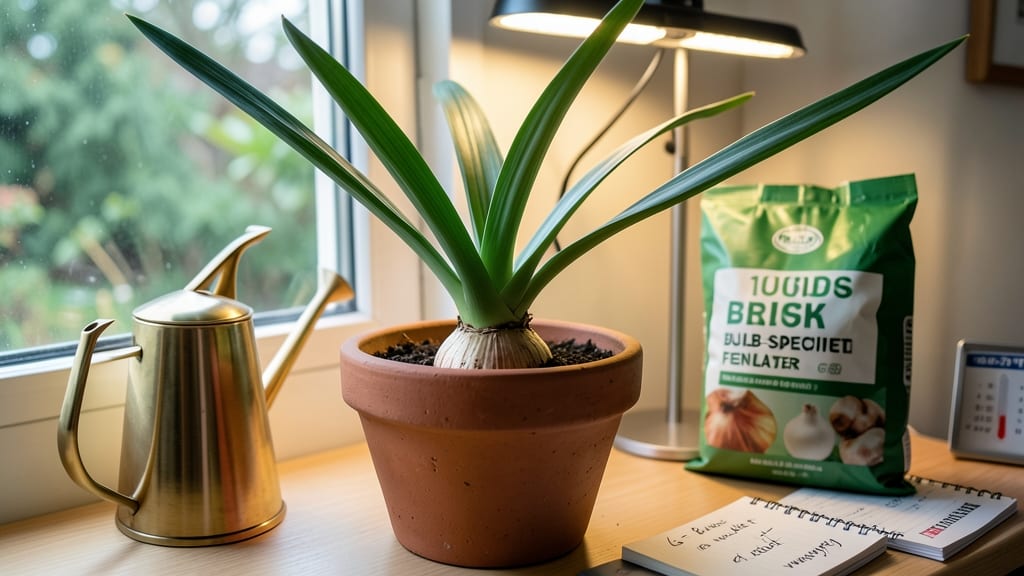
How do I get my amaryllis to bloom after it grows long leaves? The secret lies in heat, light, and patience—not just water or fertilizer. Most gardeners miss the dormancy trigger that forces those stunning flowers to appear.
Long leaves mean your plant is healthy, but it’s waiting for the right signals: 60°F nights and 12+ hours of darkness to kickstart blooming. Overwatering or too much light can stall the process entirely. The key is mimicking its natural cycle—even indoors.
By adjusting light exposure and temperature, you’ll see buds within 6-8 weeks. The blooms will be worth the wait: bold, fragrant, and show-stopping. I’ve revived stubborn amaryllis this way after years of no flowers.
Works for both potted plants and bulbs in the ground. Here’s exactly how to time it right for your climate and setup.
The Real Reasons Blooms Stall
Your amaryllis (Hippeastrum spp.) has put all its energy into growing lush, long leaves—only to leave you staring at a stubbornly bare stem. Don’t panic! The issue almost always boils down to a few key factors tied to the plant’s natural biology and care environment.
Understanding these triggers is half the battle in coaxing those stunning blooms. Let’s break down the science-backed reasons your amaryllis is holding back its flowers—and what you can do about it.
Amaryllis bulbs are native to tropical and subtropical regions, where they experience distinct seasonal temperature shifts. These fluctuations act as a natural blooming trigger. If your home stays too cool (below 65°F/18°C consistently), the bulb may prioritize leaf growth over flower production—or worse, skip flowering entirely.
- Why it happens: Amaryllis bulbs need a warmth gradient to signal dormancy and flower initiation. Cooler temps (like a drafty windowsill) tell the bulb to store energy for leaves, not blooms.
- Science note: The bulb’s meristems (growth points) require consistent warmth (70–75°F/21–24°C) to break dormancy and produce flower stalks. Below this, photosynthesis fuels leaves instead.
- Actionable fix:
- Move the pot to a sunny, warm spot (e.g., near a south-facing window or under grow lights).
- Use a heat mat (set to 70°F/21°C) under the pot for 2–3 weeks before expected blooming season.
- Avoid placing it near AC vents or cold drafts—temperature swings confuse the bulb.
Think of sunlight as your amaryllis’s bloom fuel. While leaves can grow in moderate light, flower stalks demand intense, direct light to develop. If your plant gets only artificial or diffused light, it’ll keep growing leaves but won’t allocate energy to blooms.
- Why it happens: Amaryllis bulbs need 12–14 hours of bright, indirect to direct light daily. Low light triggers etiolation—where the plant stretches leaves to reach light, but skips flower bud formation.
- Science note: The bulb’s phytochrome pigments (light-sensitive proteins) detect red and blue spectrum light. Without enough, the plant defaults to vegetative growth.
- Actionable fix:
- Place the plant in a south- or west-facing window for 6+ hours of direct sun.
- Supplement with a full-spectrum LED grow light (12–14 hours/day) if natural light is weak.
- Rotate the pot quarter-turn weekly to prevent lopsided growth (leaves may block light from reaching the bulb).
Too much love (in the form of water) can drown your amaryllis’s blooming dreams. These bulbs are succulent-adapted, meaning they store water and nutrients—and rot easily when soggy. Overwatering forces the plant to focus on survival (leaf growth) over reproduction.
- Why it happens: Bulbs need a drying cycle between waterings. Saturated soil cuts off oxygen to roots, triggering stress hormones that suppress flower initiation.
- Science note: The bulb’s meristematic cells (flower-forming cells) require aerated conditions to activate. Excess moisture activates anaerobic pathways, which shut down blooming signals.
- Actionable fix:
- Water only when the top 2–3 inches of soil are dry (stick your finger in to check!).
- Use a pot with drainage holes and a well-draining mix (cactus/succulent soil + perlite/pumice).
- Let water run out completely—never let the bulb sit in saucers of water.
If your amaryllis is leafy but flowerless, it’s likely getting too much nitrogen—the nutrient responsible for leafy growth. While nitrogen is great for foliage, it diverts energy away from blooms unless balanced with phosphorus and potassium.
- Why it happens: Most houseplant fertilizers are high in nitrogen (e.g., 30-10-10). Amaryllis bulbs need a lower N ratio (e.g., 10-20-20 or 5-10-10) to trigger flowering.
- Science note: Phosphorus (P) is critical for flower development, while potassium (K) supports stress resilience. A high-N diet blocks P uptake, stalling blooms.
- Actionable fix:
- Switch to a bloom-boosting fertilizer (e.g., 5-10-10 or 10-20-20) diluted to half strength.
- Fertilize only during active growth (spring–summer) and stop in fall to let the bulb rest.
- Add a phosphorus-rich supplement like bone meal or fish emulsion once a month in spring.
Amaryllis bulbs are seasonal plants that need a period of rest to reset their biological clock. Without dormancy, the bulb keeps growing leaves and never signals the brain to produce flowers.
- Why it happens: In the wild, amaryllis bulbs experience dry, cool seasons (dormancy). Without this, the bulb never enters the "bloom mode".
- Science note: Dormancy triggers the bulb to produce florigen (a flowering hormone). Without it, the plant defaults to vegetative growth.
- Actionable fix:
- After leaves yellow (late summer/fall), reduce watering and stop fertilizing.
- Move the pot to a cool (55–60°F/13–16°C), dark place for 6–8 weeks (simulating winter).
- Res
Revive Your Amaryllis Bloom Cycle
Now that you understand why your amaryllis is holding back on those stunning blooms, let’s roll up our sleeves and get it flowering again! The good news? Most issues are fixable with a few targeted tweaks.
Below, we’ll map out the most common causes and their practical, step-by-step solutions, plus tips to keep your plant thriving long-term.
---
Fix: Move your amaryllis to a bright, indirect light spot (like an east- or west-facing window). If that’s not an option, supplement with a grow light 12–14 hours daily.
How to Do It: 🔥 Assess your light: Hold your hand near the plant—if you can’t see your shadow clearly, it’s too dim. 🍳 Rotate weekly: Turn the pot ¼ turn to ensure even growth. 👨🍳 Gradual transition: If moving from low to high light, do it over 1–2 weeks to avoid leaf burn. 🌡️ Prevention tip: Keep leaves dust-free (wipe with a damp cloth monthly) to maximize light absorption.
---
Fix: Aim for 65–75°F (18–24°C) during the day and 55–60°F (13–16°C) at night. Avoid drafts (AC vents, heaters) and sudden temperature swings.
How to Do It: ⏰ Monitor your space: Use a thermometer near the plant for accuracy. 🔪 Adjust airflow: If your home is too dry (common with heaters), use a pebble tray with water or a humidifier. 🎯 Prevention tip: If blooming in winter, keep it away from cold windows—glass conducts chill, shocking the bulb.
---
Fix: Let the top 2–3 inches of soil dry out between waterings. Ensure your pot has drainage holes, and use a well-draining mix (cactus/succulent soil + perlite).
How to Do It: 🥗 Check moisture: Stick your finger in the soil—if it’s damp past your first knuckle, wait. 🍎 Repot if needed: If your pot lacks drainage, transfer to one with holes or add a layer of gravel at the bottom. ✨ Prevention tip: Water only at the base—never let leaves sit in water to prevent rot.
---
Fix: Mimic the amaryllis’s natural cycle by reducing water and light for 6–8 weeks after blooming (even if it has leaves). Then, shock it with warmth and light to trigger buds.
How to Do It: 🔥 Simulate winter: Move to a cool (55–60°F), dim spot and water sparingly (every 3–4 weeks). 🍳 Wake it up: After dormancy, place in bright light (70°F+) and resume regular watering. 💡 Pro tip: If your plant is healthy but stubborn, try moving it outdoors in spring/summer (partial shade) for a natural boost.
---
Fix: Use a balanced, water-soluble fertilizer (10-10-10 or 20-20-20) only during active growth (spring–summer). Dilute to half-strength to avoid salt buildup.
How to Do It: 💪 Fertilize lightly: Feed every 4–6 weeks during growth, then stop when buds form. 🥗 Flush the soil: Once a year, water thoroughly to leach excess salts. 🎯 Prevention tip: If leaves yellow, it could mean over-fertilizing—pause feeding and water more.
---
Fix: If you recently repotted or disturbed the bulb, wait 4–6 weeks before expecting blooms. Handle the bulb gently—roots are delicate!
How to Do It: 🔪 Repot carefully: Only do this after blooming (spring) or if the pot is too small. 🌱 Inspect roots: If repotting, trim soft, mushy roots (sign of rot) but leave healthy ones intact. ✨ Prevention tip: If your bulb feels squishy or hollow, it’s past saving—start fresh with a new bulb.
--- 💡 Final Reminder: Patience is key! Amaryllis bulbs can take 6–8 weeks to respond to changes. Track your adjustments (light, water, temps) in a journal to spot patterns. With these fixes, you’ll be admiring those trumpet-shaped blooms in no time! 🌸
Frequently asked questions
Why does my amaryllis keep growing leaves but never blooms?
Your plant is likely getting too much nitrogen or not enough dormancy. Amaryllis bulbs need 6-8 weeks of cooler temps (55-60°F) and reduced water after blooming to reset their cycle. Without this rest period, they focus all energy on leaves. Also check light levels—12+ hours of bright light daily is crucial for flower formation.
Can I force my amaryllis to bloom indoors without sunlight?
Yes! Use a full-spectrum LED grow light for 12-14 hours daily placed 6-12 inches above the plant. Combine this with warmth (70-75°F) and proper dormancy (cool, dark period) to trigger blooms. Rotate the pot weekly to prevent lopsided growth from one-sided light.
How long does it take to see buds after adjusting care?
With proper conditions, you should see flower stalks emerging within 6-8 weeks. The key timing is after your dormancy period—when you return the bulb to warmth and bright light. Be patient: some mature bulbs may take up to 10-12 weeks to respond, especially if they've been neglected for years.
What should I do if my amaryllis has no flower buds but healthy leaves?
First, check your fertilizer—switch to a low-nitrogen, high-phosphorus formula (5-10-10) and apply it only during active growth. Then, ensure proper dormancy: reduce watering by 75% and move to a cool (55-60°F), dark location for 8 weeks. After dormancy, return to warmth and bright light to trigger blooming.
Is it too late to save my amaryllis if it hasn't bloomed in years?
Not at all! Even old bulbs can bloom again with the right care. Start by repotting in fresh, well-draining soil and giving it proper dormancy. Many gardeners revive stubborn bulbs this way. The key is consistency—maintain warmth, light, and proper watering for at least 3-4 cycles to see reliable blooms.