
Shrubs
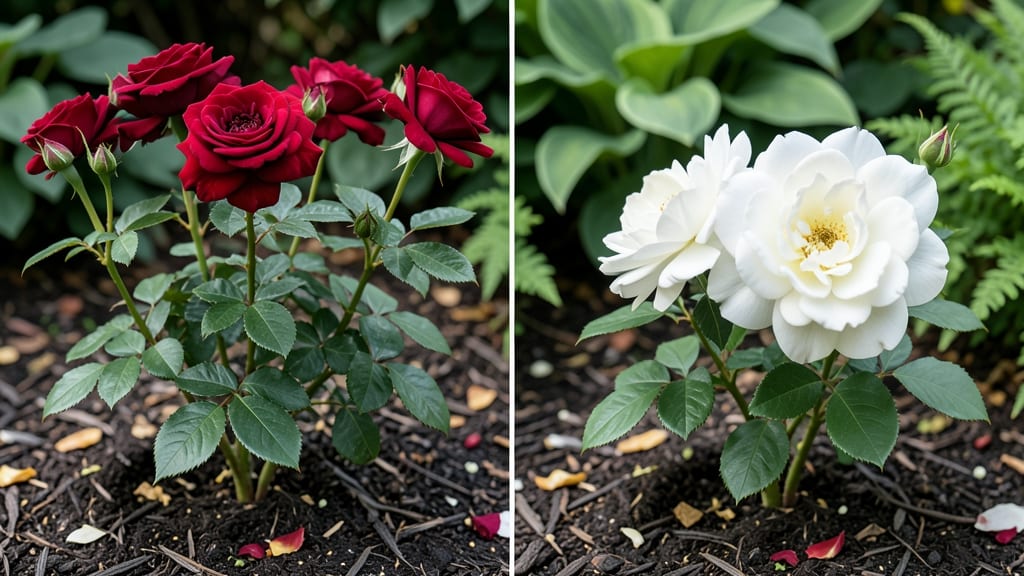
Your garden could be a romantic canvas with red rose white rose climbing combos that steal the show. 🌹 These two classic varieties together create drama—deep reds against crisp whites—while their layered fragrance lingers even when you're not looking.
The secret isn't just planting them; it's training them to climb, pruning for continuous blooms, and pairing them with foliage that makes their colors pop.
Start with a sturdy arbor or trellis—6-8 feet tall—where the reds and whites can intertwine like a living tapestry. Plant them 3-4 feet apart so their canes can spread without crowding, and add climbing clematis or jasmine nearby for extra vertical interest.
The contrast works best when you let the roses climb upward while lower borders feature silver foliage or purple blooms to ground the drama.
By late summer, you'll have foot-long stems draped in overlapping blooms, their scent stronger in morning light.
The reds deepen in heat, the whites stay bright even in shade, and together they create a focal point that works year-round—bare branches in winter still have character, and spring's first flush is unforgettable.
Pro tip: Prune in early spring to shape both varieties, and deadhead spent blooms to encourage more flowers. This combo thrives in full sun but handles partial shade too—just expect slightly fewer blooms.
For maximum impact, plant them near seating areas or entryways where their fragrance and beauty can be enjoyed up close.
📚 In This Guide
- What you need
- Instructions
- Tips and common mistakes
- Wrapping up and next steps
What you need
- ● Red Rose White Rose climbing roses: 1-2 bare-root plants or 1-gallon container-grown roses (choose disease-resistant varieties like 'Blanc Double de Coubert' or 'Cécile Brünner').
- ● Well-draining soil: Mix of native soil, compost (50%), and perlite/sand (20%) for optimal aeration.
- ● Organic fertilizer: 5-10-5 or 10-10-10 blend (1 lb per plant).
- ● Mulch: 2-3 inches of wood chips or shredded bark to retain moisture.
- ● Hand trowel or spade: For digging planting holes (12-18" wide/deep).
- ● Pruning shears: Sharp, bypass-style shears (sterilized with rubbing alcohol).
- ● Garden hose or watering can: For deep watering (1-2 gallons per plant).
- ● Trellis or support structure: 6-8 ft tall, sturdy lattice, arbor, or fence (galvanized metal or cedar recommended).
- ● Garden gloves & knee pads: For comfort during planting/pruning.
- ● Rose food: Monthly liquid feed (e.g., fish emulsion) for blooms.
- ● Epsom salt: 1 tbsp per gallon of water (monthly spray for magnesium).
- ● Rose-specific fungicide: Preemptive treatment (e.g., copper spray) for humidity-prone areas.
- ● Drip irrigation system: Automates watering (saves time and stress!).
Step-by-step guide to pruning red and white climbing roses for year-round blooms
Here's how I transform climbing roses into fragrant, continuous bloomers—no fancy tools, just sharp cuts and timing.
✂️ Step 1: Prune for Structure in Late Winter
Start when your roses are still dormant, usually in late February or early March before new growth begins. I look for bare branches—these are the ones that didn't produce flowers last season. Cut these back to the ground completely, but leave the thicker, older stems that show signs of life (small buds or swelling nodes). These are your rose's framework and will support new growth.
Make your cuts at a 45-degree angle, about ¼ inch above an outward-facing bud. This angle helps water run off the cut, preventing rot. I always use clean, sharp pruners—dull blades tear stems and invite disease. After pruning, give the plant a light watering to help it recover from the shock of the cuts.
☀️ Step 2: Encourage Summer Blooms After First Flowers Fade
Once your roses finish their first flush of blooms, usually in early to mid-summer, it's time to shape them for a second round of flowers. I remove spent blooms by cutting back to the first set of five healthy leaves below the flower. This encourages the plant to send out new shoots from those leaves, which will eventually bloom again.
Don’t overdo it—if you cut too far back, you’ll sacrifice next year’s flowers. Watch for new growth emerging from the sides of the stems. These are your signals that the plant is responding well. If your roses are in full sun, they’ll reward you with a second burst of blooms in late summer or early fall.
✂️ Step 3: Light Pruning for Fall and Winter Hardiness
As temperatures drop in late fall, focus on cleaning up rather than drastic pruning. Remove any dead, diseased, or crossing branches—these can harbor pests or fungi over winter. Cut back any weak, leggy growth that didn’t bloom well, but leave the strong, healthy stems intact. This keeps the plant’s energy focused on its core structure.
I also tie up any loose canes to their supports now, securing them gently but firmly. This prevents wind damage and helps the plant maintain its shape through winter. Avoid heavy pruning in fall—it stresses the plant when it’s already conserving energy for dormancy.
🌱 Step 4: Spring Maintenance for Continuous Blooms
In early spring, just as new growth appears, give your climbing roses a light trim to remove any dead wood or weak shoots. Look for suckers—these are shoots growing from the base of the plant or from the graft union. Remove these immediately, as they drain energy from the main plant. Keep only 3-5 of the strongest canes per plant to encourage robust growth.
Feed your roses with a balanced fertilizer (like 10-10-10) in early spring and again after the first flush of blooms. Water deeply once a week, ensuring the soil stays moist but not soggy. Mulch around the base with 2-3 inches of organic mulch to retain moisture and protect roots from temperature swings.
⏰ Step 5: Deadhead and Train for Year-Round Fragrance
Throughout the growing season, deadhead spent blooms regularly to encourage more flowers. Cut back to the first strong leaf set below the bloom, and avoid leaving stubs—this keeps the plant tidy and focused on producing new growth. I also train new canes along their supports, tying them loosely with soft plant ties to guide their growth upward.
Watch for pests like aphids or spider mites—they love tender new growth. If you spot them, spray the plant with neem oil or a soapy water solution (1 tablespoon mild dish soap per gallon of water). Aphids are especially attracted to new shoots, so check regularly. With consistent care, your climbing roses will reward you with fragrant blooms from spring through fall—and sometimes even into winter in mild climates.
Tips & tricks for perfect climbing rose pruning
These pruning secrets will help you coax year-round blooms from your climbing roses—no green thumb required!
Timing is Everything: Late February or early March is the sweet spot for your first pruning session. Look for those telltale signs of dormancy—bare branches that didn't bloom last year. These are your plant's way of saying "I'm ready to start fresh!" Cut them back completely while leaving the thicker stems with life signs (buds or swelling nodes). This timing gives your roses the head start they need for a strong spring flush.
The 45-Degree Angle Secret: When making your cuts, that 45-degree angle isn't just for show—it's a water management system! The sloped cut directs water away from the wound, preventing rot that can invite disease. I always make my cuts about ¼ inch above an outward-facing bud. This creates a natural growth pattern that opens your plant up to sunlight, encouraging those lush, fragrant blooms we all love. Think of it as creating little growth highways for your roses.
Deadheading Done Right: Throughout the growing season, deadheading isn't just about tidying up—it's about sending signals to your plant. When you remove spent blooms by cutting back to the first set of five healthy leaves, you're telling your roses "Keep going!" This encourages new shoots to emerge from those leaf nodes, which will eventually become your next round of beautiful flowers. The key is consistency—check your roses regularly, especially after they've finished blooming. You'll notice a difference in just a few weeks!
Pest Prevention Strategy: Aphids and spider mites love tender new growth, and they'll be drawn to your roses like bees to honey. I keep a bottle of neem oil and a soapy water solution (1 tablespoon mild dish soap per gallon of water) on hand year-round. Check your new shoots regularly, especially after pruning or when new growth appears. Early intervention is the best defense—these pests multiply quickly, and once they've established themselves, they're much harder to control. A quick spray every few weeks keeps them at bay.
Pro Tips for Red Rose White Rose
- These pruning secrets will help you coax year-round blooms from your climbing roses—no green thumb required!
- Timing is Everything: Late February or early March is the sweet spot for your first pruning session.
- The 45-Degree Angle Secret: When making your cuts, that 45-degree angle isn't just for show—it's a water management system!
Frequently asked questions
Got questions about your Red Rose White Rose climbing roses? You’re not alone!
Here are some of the most common inquiries—plus quick, expert-backed answers to keep your vines thriving year-round.
Why does my Red Rose White Rose only bloom once a year?
This climbing rose typically produces one major flush of blooms in late spring to early summer—its genetic focus on showy, long-lasting flowers over repeat blooming. To encourage year-round fragrance, prune strategically in early spring (remove dead wood + shape for airflow) and fertilize lightly after blooming. Pro tip: Deadhead spent blooms to redirect energy into foliage, which can produce occasional summer blooms.
When’s the best time to prune for continuous blooms?
The golden window is late winter to early spring (just before buds swell). For Red Rose White Rose, aim for 30-40% reduction of old wood—cut back to healthy outward-facing buds (about ¼ inch above). Skip fall pruning; it stresses the plant before dormancy. Bonus: Light summer trims after blooms can coax a few extra flowers.
Can I grow Red Rose White Rose in containers? If so, what size pot?
These vines thrive in large containers (15+ gallons) with well-draining soil and a trellis or obelisk for support. Use a balanced fertilizer (10-10-10) every 4-6 weeks during growing season. Watch for:
- Root-bound stress → Repot every 2-3 years.
- Drought sensitivity → Water deeply when topsoil dries (2-3 inches).
What pests should I watch for, and how do I treat them?
Common culprits include aphids, spider mites, and Japanese beetles. Preventative care:
- Neem oil spray (weekly during outbreaks).
- Introduce ladybugs or lacewings for natural control.
- Hose off aphids with water (they hate pressure!).
Are there fragrant alternatives to Red Rose White Rose?
If you love old-garden romance but want more blooms, try these fragrant climbing roses:
Variety
Bloom Time
Fragrance Notes
New Dawn
Repeats all season
Sweet, tea-rose-like
Blaze
Spring–fall
Spicy, myrrh-heavy
Zephirine Drouhin
Summer–fall
Lemon, raspberry, citrus
Wrapping up and next steps
The red rose white rose climbing roses aren’t just stunning—they’re a year-round masterpiece when you master the art of pruning! 🌹 With the right techniques, you’ll keep their blooms vibrant, their fragrance intoxicating, and their growth healthy.
Whether you’re trimming for shape, health, or encouragement, every snip is a step toward a garden that feels like a romantic escape.
Ready to take your pruning skills to the next level? Start small: pick one rose bush this season, follow the steps you’ve learned, and watch how a little effort transforms your space. Your garden—and your roses—will thank you! 🌿✨