
Pruning
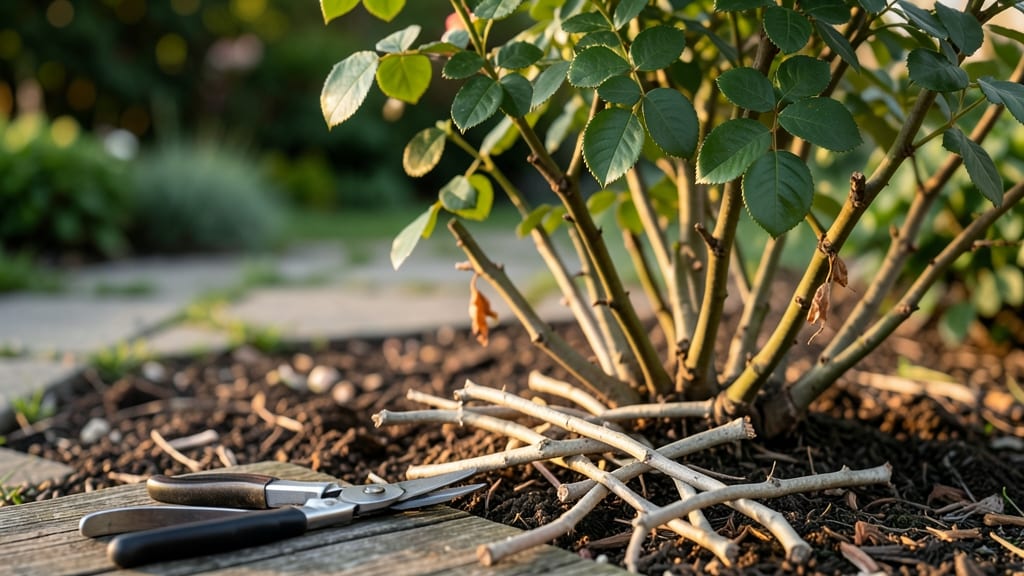
Your rose bush’s blind shoots are stealing energy from those stunning blooms. 🌹 I’ve seen this happen when overcrowding or poor pruning leaves canes struggling to flower—until I learned the simple cuts that wake them up.
These vertical shoots with no buds are a classic sign your rose needs better airflow and light, but fixing them is easier than you think.
The real culprit? Too many canes competing for sunlight or last year’s pruning mistakes. I’ve pruned dozens of bushes where blind shoots disappeared after just one late-winter cleanup. The key is targeting the oldest, thickest canes first—those are the ones hogging resources from your flowering stems.
By mid-spring, you’ll see new growth bursting with buds instead of bare stems. The blooms come thicker, the plant stays healthier, and you skip the frustration of waiting for flowers that never arrive. Even my black-thumb friends get results with this method.
Works for hybrid teas, floribundas, and shrub roses alike—just adjust timing to your climate. Here’s how to spot and prune them without guessing.
Understanding the root causes
Blind shoots—those stubborn, leafless stems sprouting from your rose bushes—can be frustrating, but they often stem from a few key biological and environmental triggers. Let’s break down why they appear and how your rose’s natural behaviors (or even your own gardening habits) might be encouraging them.
During late winter or early spring, rose bushes undergo dormancy, a survival mechanism triggered by cold temperatures and shorter daylight.
While dormant, the plant conserves energy, but its hormonal balance shifts dramatically. Auxin, a growth hormone, becomes less active, while cytokinins (cell-division hormones) may spike in certain areas—like the base of canes or graft unions.
This imbalance can cause misplaced growth signals, prompting blind shoots to emerge from unexpected spots like the soil line or along older stems.
Why it matters: If you prune too early (before the plant’s natural hormonal reset), you risk stimulating blind shoots by exposing raw tissue to warmth and moisture. Think of it like waking a hibernating bear too soon—it’s disoriented and may act unpredictably!
Roses are sensitive to temperature swings, especially in early spring. A sudden warm spell after a frost can confuse the plant’s growth cycle.
Here’s how it plays out: - Cold snaps slow metabolic activity, keeping the plant dormant. - Unseasonable warmth (e.g., 60°F+ days in February) tricks the rose into thinking spring has arrived, prompting premature bud break—even in blind shoots. - If nighttime temps drop again, these new shoots lack the energy to develop leaves, resulting in leafless stems.
Pro tip: 🌡️ Monitor your local chill hours (the cumulative hours below 45°F). Roses typically need 500–1,000 chill hours to break dormancy properly. If your area has erratic winters, consider mulching heavily in fall to moderate soil temps.
Pruning is essential, but aggressive or poorly timed cuts can backfire by stimulating blind shoots. Here’s how: - Cutting too close to the graft union (where the rose’s main cane is attached to a hardy rootstock) disrupts the plant’s energy flow.
The rootstock may send up suckers—basically, blind shoots from below the graft—to compensate. - Top-heavy pruning (removing too many upper canes) forces the plant to redirect energy downward, often resulting in basal shoots (blind or otherwise) at the base. - Using dull or contaminated tools creates jagged cuts that heal poorly, inviting disease or fungal growth, which can stress the plant into producing compensatory shoots.
Actionable fix: Always prune at a 45° angle, ¼” above an outward-facing bud (the "eyes" on the cane). Avoid cutting into old, woody stems—focus on healthy, pencil-thick canes with green pith.
Blind shoots can also be a stress response.
When roses experience: - Nitrogen deficiency (yellowing leaves, weak stems), they may produce blind shoots as a way to reallocate resources to root growth. - Overwatering or poor drainage (leading to root rot), which forces the plant to send up emergency shoots from unaffected areas. - Competition from weeds or grass smothering the base, starving the rose of nutrients and prompting desperate growth from the soil line.
Soil test tip: 💡 Use a DIY soil test kit (or send a sample to your local extension office) to check pH and nutrient levels. Roses thrive in slightly acidic soil (6.0–6.5) with balanced N-P-K (10-10-10 fertilizer) in early spring.
While less common, pathogens like Botrytis cinerea (gray mold) or Pseudomonas syringae (bacterial canker) can weaken rose canes, leading to deformed or leafless growth. Symptoms include:
- Blackened or oozing cankers on stems.
- Stunted, twisted shoots with no leaves.
- Dieback (sudden browning of stems).
If you suspect infection, prune infected canes 6” below the damage and sterilize tools with rubbing alcohol between cuts. Avoid pruning during wet weather to prevent spreading spores.
Some rose types are more prone to blind shoots due to their growth habits:
- Climbing roses (e.g., ‘New Dawn’) often produce long, leafless canes as they search for support.
- Hybrid teas may develop blind shoots if their terminal buds (the main growing point) are damaged.
- Old garden roses (like ‘Blush Noisette’) sometimes revert to wild-type growth, sending up unexpected shoots.
Variety hack: If you love a rose but hate its blind shoots, try grafting a different variety onto the same rootstock—this can sometimes suppress the issue. Or, simply train the shoots to grow where you want them!
Fixing Blind Shoots in Roses
Blind shoots—those stubborn, non-flowering stems—can turn your rose bush into a leafy jungle instead of a blooming beauty. But don’t worry! With the right approach, you can revive growth, encourage flowers, and keep your roses thriving.
Below are practical, step-by-step solutions tailored to the most common causes of blind shoots, plus prevention tips to keep your roses in peak condition.
Problem: Too many stems compete for energy, leaving no room for buds.
Solution:
- 🔪 Trim Back Aggressively
- Use clean, sharp pruners (sterilized with rubbing alcohol) to cut back 1/3 to 1/2 of the bush in early spring.
- Focus on thick, woody stems—these often produce fewer flowers.
- Goal: Open up the center for airflow and sunlight.
- 🌱 Prioritize Stronger Canes
- Look for thick, healthy stems (about pencil-sized) with buds facing outward.
- Cut back weak, thin, or crossing branches—these steal energy from flower production.
- Pro Tip: Make cuts at a 45-degree angle just above an outward-facing bud.
- 🌿 Encourage New Growth
- After pruning, fertilize with a high-phosphorus bloom booster (like 5-10-5) to stimulate bud formation.
- Water deeply but avoid soggy soil—roses hate wet feet!
Prevention:
- Prune regularly (2-3 times a year) to prevent overcrowding.
- Deadhead spent blooms to redirect energy into new flowers.
Problem: Lack of key nutrients (especially phosphorus and potassium) leads to leafy growth instead of blooms.
Solution:
- 💡 Test Your Soil
- Use a DIY soil test kit (or send a sample to a local extension office) to check pH and nutrient levels.
- Ideal pH for roses: 6.0–6.5 (adjust with lime or sulfur if needed).
- 🌱 Fertilize Strategically
- Spring (March–April): Apply a balanced fertilizer (10-10-10) to kickstart growth.
- Early Summer (June): Switch to a high-phosphorus formula (like 5-10-5) to encourage budding.
- Avoid nitrogen-heavy fertilizers (like lawn food) in late summer—they promote leaves, not flowers!
- 🍎 Organic Boosts
- Mix compost or well-rotted manure into the soil for slow-release nutrients.
- Epsom salt (magnesium sulfate) can help if leaves look yellow—dissolve 1 tbsp per gallon of water and spray foliage monthly.
Prevention:
- Mulch around the base (2–3 inches of organic mulch) to retain moisture and nutrients.
- Avoid over-fertilizing—too much nitrogen = more leaves, fewer blooms!
Problem: Roses need 6–8 hours of sunlight daily to bloom. Too much shade or poor airflow leads to leggy, non-flowering growth.
Solution:
- 🌞 Move or Thin Surroundings
- If possible, relocate the bush to a sunnier spot (even partial sun helps).
- If moving isn’t an option, prune nearby trees/shrubs to increase light exposure.
- Pro Tip: Use a reflective surface (like a white wall or mirror) to bounce extra sunlight onto the bush.
- 🌿 Improve Air Circulation
- Space roses 2–3 feet apart (depending on variety) to prevent humidity and disease.
- Thin out dense foliage by removing inner branches that block light.
- 💧 Water Wisely
- Deep watering (1–2 inches per week) encourages strong root growth.
- Avoid overhead watering—wet leaves attract fungal diseases.
Prevention:
- Plant roses in full sun from the start—most varieties won’t thrive in deep shade.
- Group roses together to create a microclimate with better airflow.
Problem: Pruning at the wrong time (like mid-summer) can shock the plant and delay blooming.
Solution:
- 📅 Prune at the Right Time
- Late Winter/Early Spring (Feb–March): Best for major pruning (before new growth starts).
- After First Bloom (June–July): Light pruning to shape and encourage reblooming.
- Avoid Fall Pruning—roses need time to harden off before winter.
- 🌱 Encourage Reblooming Varieties
- If your rose is a repeat bloomer (like Hybrid Teas or Floribundas), prune lightly after each flush to promote new buds.
- Once-blooming roses (like Old Garden Roses) should be pruned only in late winter.
Prevention:
- Mark your pruning schedule with reminders (e.g., "Prune in March!").
- Avoid heavy cuts in summer—this can stunt fall blooms.
Problem: Fungal diseases (like black spot) or pests (aphids, spider mites) weaken roses, leading to poor flowering.
Solution:
- 🛡️ Treat Fungal Issues
- Remove infected leaves immediately and sterilize pruners.
- Spray with neem oil or fungicide (like copper-based solutions) every 2–3 weeks during wet seasons.
- Pro Tip: Water at the base (not overhead) to keep foliage dry.
- 🐜 Control Pests Naturally
- Hose off aphids with a strong stream of water.
- Introduce beneficial insects (like ladybugs) or use insecticidal soap.
- Check undersides of leaves—this is where pests hide!
- 💪 Strengthen the Plant
- Reduce stress by ensuring consistent watering and well-draining soil.
- Avoid heavy pruning if the bush is already struggling—focus on removing dead/diseased wood.
Prevention:
- Monitor roses weekly for early signs of pests/disease.
- Rotate fungicides to prevent resistance.
Final Thought: Blind shoots don’t mean your rose is doomed—they just need a little TLC! By pruning smart, feeding right, and giving them sunlight, you’ll turn those leafy stems into a blooming paradise in no time. 🌹✨
Frequently asked questions about rose bush blind shoots
What exactly are rose bush blind shoots?
Blind shoots are leafless or nearly leafless stems that sprout from your rose bush, often growing straight up without buds. They can appear at the base of the plant, along existing canes, or even from the graft union. These shoots typically don't produce flowers and can signal overcrowding or improper pruning practices.
Can I just leave blind shoots on my rose bush?
While they won't kill your rose, leaving blind shoots can weaken the plant by competing for nutrients and sunlight. These shoots often indicate the bush needs better airflow or pruning. Removing them in late winter helps redirect energy to flowering canes. Think of it like decluttering—your rose will thank you with more blooms!
How do I tell the difference between blind shoots and suckers?
Blind shoots grow from the main plant's canes or base, while suckers sprout from below the graft union (where the rose is attached to its rootstock). Both are leafless or nearly leafless, but suckers come from the rootstock's genetic material. Always remove suckers completely—they can revert to wild-type growth and crowd out your desired rose variety.
When is the best time to prune blind shoots?
Late winter or early spring (just before new growth begins) is ideal for major pruning. Wait until your last expected frost date has passed in your area. For repeat-blooming varieties, you can also do light pruning after the first flush of blooms in summer. Never prune in fall—this can stimulate new growth that won't harden off before winter.
What should I do if my rose keeps producing blind shoots after pruning?
Persistent blind shoots often indicate underlying issues like poor nutrition, overcrowding, or disease. First, check your pruning technique—make sure you're cutting at a 45° angle above outward-facing buds. Then test your soil for pH and nutrient balance (ideal is 6.0-6.5). If problems continue, consider whether your rose variety naturally produces more vegetative growth or if it's struggling with fungal issues.