
Shrubs
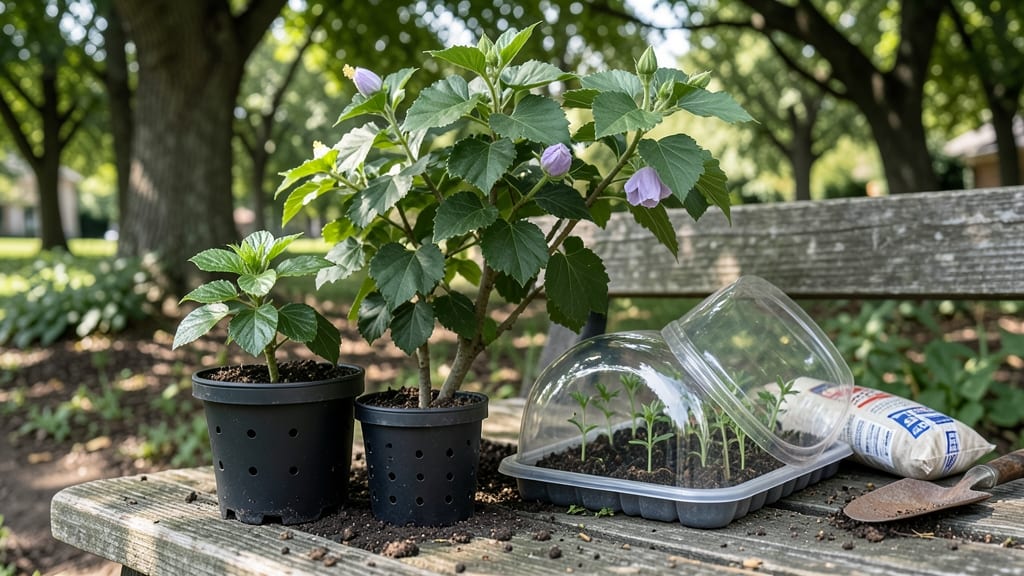
A rose of Sharon seedlings picture can reveal all you need to know—start with the leaves, which should be deep green, slightly fuzzy, and shaped like tiny maple leaves. 🌿 I’ve learned that seedlings with smooth, glossy leaves often struggle later, while the fuzzy texture helps them retain moisture.
The stems should stand upright, not flop like overwatered cuttings, and the roots should be white and fibrous when gently pulled from their container. The best seedlings grow about 2-3 inches tall in their first month, with a sturdy base that doesn’t snap when touched.
Look for multiple sets of leaves (not just the first pair) and a slight reddish tint at the leaf joints—this means they’re photosynthesizing well. If you’re comparing pictures, trust the ones showing compact growth and no yellowing, which signals poor health.
Once you’ve picked the strongest starts, prepare them for transplanting by hardening off for a week—move them outside gradually to toughen their skin. Use a well-draining mix of potting soil and perlite to keep roots happy, and plant them in full sun where they’ll bloom for years.
The key is patience; these seedlings need time to establish before they reward you with those iconic summer blooms. For reference images, check university extension service websites or trusted gardening forums—they’ll show you what healthy Rose of Sharon seedlings look like at each stage.
Avoid buying from sellers who can’t provide clear photos of their stock, as that’s often a red flag for weak or diseased plants.
📚 In This Guide
- What you need
- Instructions
- Tips and common mistakes
- Wrapping up and next steps
What you need
- ● Rose of Sharon seedlings – Look for healthy, disease-free starts (3-6 inches tall) with 2-3 sets of leaves.
- ● Well-draining potting mix – 1 bag (5-10 lbs) of a lightweight blend (e.g., 60% peat moss, 30% perlite, 10% compost).
- ● Containers or seedling trays – 4-6-inch pots (or a flat tray with drainage) for each seedling.
- ● Drainage materials – Small pebbles or broken pottery shards (1-2 inches per pot) to prevent root rot.
- ● Slow-release fertilizer – 10-10-10 NPK (1 tbsp per gallon of soil mix).
- ● Watering can or spray bottle – Fine mist for gentle hydration.
- ● Pruning shears – For trimming leggy seedlings or dead leaves.
- ● pH test kit – To ensure soil pH is 6.1–6.5 (ideal for Hibiscus).
- ● Grow lights or sunny windowsill – If natural light is less than 6 hours/day.
- ● Mulch (straw or bark chips) – To retain moisture and regulate temperature.
How to identify healthy Rose of Sharon seedlings
Here's how to spot strong, thriving Rose of Sharon seedlings before you plant them.
🌱 Step 1: Examine the Stem and Root Structure
Healthy seedlings have a thick, sturdy stem that feels firm to the touch. Look for a deep green color without any yellowing or brown spots—these are early signs of stress or disease. The stem should be about ¼ to ½ inch wide at the base, indicating a well-developed root system.
Gently grasp the base of the stem and give it a slight tug. If the seedling resists and doesn't pull easily from the pot, the roots are well-established. If it comes out too easily, the roots are still underdeveloped. Real talk: this is the moment that matters—weak roots mean poor survival after transplanting.
🌿 Step 2: Check the Leaf Health and Arrangement
Strong Rose of Sharon seedlings have bright green, glossy leaves that are free of holes, spots, or curling. The leaves should be 3-5 inches long with smooth edges and no signs of browning. Look for new growth at the tips—this shows the plant is actively photosynthesizing and growing.
Pay attention to leaf arrangement. Healthy seedlings have leaves spaced evenly along the stem, with no large gaps. If you see leaves clustered tightly at the top with long, bare stems below, the seedling is leggy—a sign it didn't get enough light. Leggy seedlings struggle to support themselves and often flop over after transplanting.
☀️ Step 3: Assess Overall Growth and Vigor
A healthy Rose of Sharon seedling grows at a steady rate, with no sudden bursts of growth followed by wilting. The plant should stand upright, not leaning or bending toward one side. If the seedling is top-heavy with lots of leaves but a thin stem, it's not yet strong enough for transplanting.
Here's the thing—healthy seedlings often have a few small buds forming at the base of the plant. These buds indicate the plant is ready to branch out and establish itself. If you don't see any buds but the leaves are vibrant and the stem is firm, the seedling is still in good shape and will likely develop them soon.
💧 Step 4: Verify Moisture and Soil Conditions
Before transplanting, check the moisture level of the soil. Stick your finger about 1 inch deep into the soil—it should feel slightly damp but not soggy. Overwatered seedlings develop weak roots and may even rot. Underwatered seedlings have crispy edges on the leaves and may wilt when touched.
I know it seems weird, but gently squeeze the soil around the roots. It should hold together loosely, like damp sand. If it crumbles easily, the seedling needs more moisture before transplanting. If it sticks together like clay, it's too wet. The right balance ensures the roots won't dry out or suffocate during the move.
✂️ Step 5: Prune and Prepare for Transplanting
Once you've confirmed the seedling is healthy, trim any damaged or yellowing leaves with clean, sharp scissors. This reduces stress on the plant and helps it focus energy on new growth. Avoid cutting into healthy green tissue—only remove leaves that are clearly struggling.
Don't skip this (I learned the hard way). After pruning, give the seedling a light watering to settle the soil around the roots. Wait about 1-2 hours before transplanting to let excess water absorb. This step ensures the seedling goes into its new home with minimal shock and maximum energy for growth.
Tips & tricks for identifying healthy Rose of Sharon seedlings
Confession: I've lost count of how many seedlings I've transplanted only to watch them struggle later. These tricks will help you spot the strongest starts before they even hit the ground.
Stem Strength Test: In Step 1, when you're checking the stem, pay extra attention to the texture. A truly healthy stem should feel like a pencil—solid and resilient. If it feels hollow or mushy when you press gently, that's a red flag. I've found that seedlings with stems wider than ½ inch at the base often handle transplanting shock better, but don't overlook slightly narrower stems if they feel firm and healthy.
Leaf Color Secrets: The bright green leaves in Step 2 should have a slight sheen, almost like they've been lightly waxed. Dull leaves usually mean poor health or insufficient light. Pro tip: Hold a leaf up to natural light—healthy leaves should let light pass through almost completely, while unhealthy ones will show brown spots or yellowing when backlit. This quick test saves me from transplanting weak seedlings.
Root Moisture Balance: For Step 4, the soil moisture test is crucial but often misunderstood. The "damp but not soggy" feeling should be consistent all the way down to your knuckle, not just the top inch. I've learned the hard way that seedlings with overly wet soil often develop root rot within days of transplanting. If you're unsure, do the squeeze test on multiple spots around the root ball—consistency matters more than any single measurement.
Pruning Precision: When you're ready for Step 5, use a pair of clean scissors to make cuts at a 45-degree angle just above a leaf node. This angled cut helps water run off and reduces the risk of disease. I always prune in the morning when the plant is turgid—this gives it the whole day to recover before transplanting. And remember, the 1-2 hour waiting period after watering is non-negotiable for best results.
Pro Tips for Rose Of Sharon Seedlings Picture
- Confession: I've lost count of how many seedlings I've transplanted only to watch them struggle later.
- Stem Strength Test: In Step 1, when you're checking the stem, pay extra attention to the texture.
- Leaf Color Secrets: The bright green leaves in Step 2 should have a slight sheen, almost like they've been lightly waxed.
Frequently asked questions
Got questions about Rose of Sharon seedlings? You’re not alone! Here are answers to the most common queries to help you grow confidently—whether you're starting from pictures or seedlings.
How do I tell if a Rose of Sharon seedling is healthy?
A healthy seedling has vibrant green leaves (no yellowing or browning), firm stems (not mushy or brittle), and no signs of pests (like holes or webbing). Roots should be white or light tan, not black or slimy. If the leaves are wilting or falling off, it may need more water or better airflow.
When is the best time to plant Rose of Sharon seedlings?
For cold climates (Zones 5-7), plant in early spring after the last frost (April–May) or early fall (September–October) to establish roots before winter. In warmer zones (8-10), plant in late fall or winter to avoid summer heat stress. Avoid planting during extreme heat or cold snaps!
Can I grow Rose of Sharon from a picture instead of seedlings?
Not directly—but you can identify a healthy seedling from a picture by checking for dark green, glossy leaves, multiple buds, and no leaf spots. If you’re buying online, look for sellers with clear photos of roots and stems. Pro tip: Ask for a video of the seedling’s condition before purchasing!
What should I do if my Rose of Sharon seedlings aren’t growing?
Common issues and fixes:
- Slow growth: May need more sunlight (6+ hours/day) or nutrient-rich soil (add compost).
- Yellow leaves: Overwatering (let soil dry slightly between waterings) or poor drainage.
- Leggy stems: Not enough light—move to a sunnier spot or use grow lights.
- No buds: Could be too young or lacking phosphorus (use a balanced fertilizer like 10-10-10).
If pests (like aphids) are attacking, spray with neem oil or insecticidal soap.
Are there alternatives to Rose of Sharon seedlings for fast blooms?
If you want quick color, try these low-maintenance shrubs with similar blooms:
- Butterfly Bush (Buddleia) – Fast-growing, attracts pollinators.
- Weigela – Bright flowers, drought-tolerant once established.
- Abelia – Blooms spring to fall, thrives in partial shade.
- Hydrangea – Large clusters, loves moisture-rich soil.
For Rose of Sharon’s hardiness, Spirea or Potentilla are great substitutes!
Wrapping up and next steps
Growing Rose of Sharon seedlings from pictures is an exciting journey into nurturing vibrant blooms! By now, you’ve learned how to spot healthy starts, gather the right tools, and troubleshoot common challenges. Remember: patience and care are your best allies—your garden will thank you with stunning flowers!
Ready to take the next step? Start by planting your seedlings in well-draining soil and give them the love they deserve. Watch them thrive, and soon, your garden will be a burst of color! 🌸