
Plants
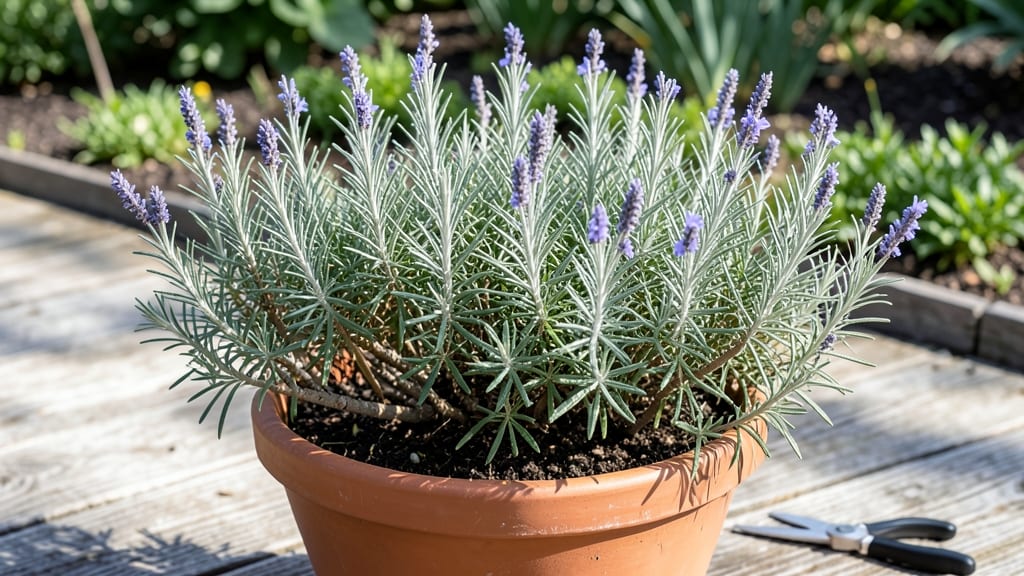
A rosemary bush looks like a compact evergreen shrub with silvery-green, needle-like leaves that grow in pairs along stiff, woody stems. This aromatic plant typically stands between 2 and 6 feet tall, forming a dense, upright silhouette that thrives in herb gardens and Mediterranean-style landscapes.
A rosemary bush's distinctive appearance comes from its linear, needle-shaped leaves that grow in opposite pairs along rigid stems—this arrangement is called decussate. 🌿 The leaves' silvery-blue hue and strong fragrance make it instantly recognizable, especially when you crush them between your fingers.
Unlike thyme or oregano, rosemary's woody stems and upright growth create a bushy, almost tree-like structure that adds vertical interest to garden beds.
In late spring or summer, you might spot its tiny blue-purple flowers clustered at the tips of branches, adding a delicate contrast to the silvery foliage. These blooms attract pollinators while maintaining the plant's overall neat, compact form.
The combination of its aromatic leaves, sturdy stems, and occasional flowers makes rosemary a standout in both culinary and ornamental gardens.
💡 In This Article
- Rosemary Plant Anatomy: Leaf, Stem, and Flower Characteristics
- Growing Conditions That Shape a Healthy Rosemary Bush
Rosemary plant anatomy: leaf, stem, and flower characteristics
The leaves of a rosemary bush are its most striking feature, measuring about 1 to 2.5 inches long and 0.1 to 0.2 inches wide—needle-like but broader than those of pine trees.
Their texture is leathery yet flexible, with a slightly rough surface that feels almost papery when brushed against your fingers. 🌿 The silvery-blue hue comes from tiny, reflective hairs on the leaves that reflect light, creating a frosty appearance even in full sun.
This unique leaf structure helps reduce water loss, which is why rosemary thrives in arid Mediterranean climates.
Rosemary’s stems are another defining trait, growing stiff and woody with age, often developing a slightly zigzag pattern as they mature. The leaves grow in opposite pairs along the stems—a botanical arrangement called decussate—creating a symmetrical, orderly look.
This contrasts sharply with herbs like thyme, whose leaves grow in whorls or clusters around the stem. The stems also produce a strong, pine-like aroma when crushed, thanks to essential oils like camphor and eucalyptol, which give rosemary its signature fragrance.
When rosemary flowers, it produces small, tubular blooms in shades of blue-purple that appear in clusters at the tips of branches, usually in late spring or early summer.
These flowers are not only visually striking but also attract bees and other pollinators. 🌸 Unlike the flat, broad leaves of oregano or the tiny, rounded leaves of thyme, rosemary’s flowers and foliage create a layered, textured appearance that makes it a favorite in ornamental gardens.
The flowers are edible but have a slightly bitter taste, so they’re often removed before harvesting leaves for cooking.
The combination of rosemary’s leathery leaves, rigid stems, and occasional flowers gives it a structured, almost architectural look in the garden. Its upright growth habit—often reaching 3 to 5 feet tall in ideal conditions—makes it a vertical focal point, while its silvery foliage provides a cool contrast to warmer-hued plants.
This distinct appearance is why rosemary stands out among other herbs, blending both culinary and decorative value in one compact package.
One way to identify rosemary is by comparing it to similar herbs: thyme has smaller, oval leaves that grow in tight clusters, while oregano features broader, rounded leaves with a softer texture.
Rosemary’s needle-like leaves and woody stems are unmistakable, especially when you crush a sprig and release that unmistakable piney scent. This sensory detail alone can help gardeners distinguish it from other Mediterranean herbs at a glance.