
Blooming
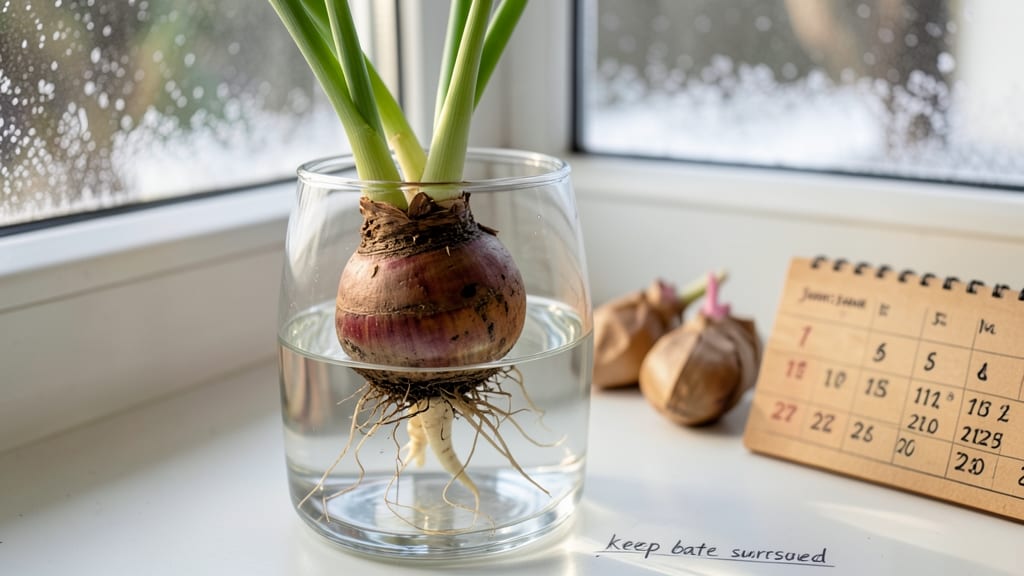
Tulip bulbs forced in water will typically not bloom again after flowering because their energy reserves are fully expended during the blooming process. However, with proper replanting into soil and a full dormancy cycle, they may regrow foliage and produce blooms in future seasons.
Forced tulips in water draw on their stored nutrients to produce flowers indoors, leaving little energy for future growth. 🌱 The bulbs lack proper root development in water, which is critical for absorbing nutrients and moisture from soil.
When replanted, they need at least 6-8 weeks of dormancy in well-draining soil before they can attempt regrowth. Even then, success depends on factors like sunlight exposure and consistent moisture—about 50% of replanted bulbs may eventually rebloom if given ideal conditions.
What makes this process tricky is that forced bulbs often skip their natural dormancy period when blooming indoors.
Without this rest phase, the bulb's internal clock stays disrupted, making it harder to trigger new growth. 💡 I've found that patience is key—some gardeners report second blooms appearing 2-3 years after replanting, while others see only leafy regrowth.
The key is treating them like outdoor bulbs after forcing, with proper soil prep and seasonal care.
💡 In This Article
- Why Forced Tulip Bulbs Rarely Rebloom in Water
- How to Maximize Tulip Bulb Regrowth After Water Forcing
Why forced tulip bulbs rarely rebloom in water
When you force tulip bulbs in water, they draw on their stored carbohydrates and nutrients—primarily in the form of starches—to produce flowers. A single bloom can consume up to 60-70% of the bulb's energy reserves, leaving little fuel for future growth.
Unlike outdoor bulbs that gradually rebuild reserves over months, water-forced bulbs have no way to replenish these stores because they lack proper root systems to absorb nutrients from soil. 🌱
The biological mechanism involves the bulb's meristem, a growth region that requires energy to initiate new shoots. In water, the bulb can't develop fibrous roots, which are essential for anchoring and nutrient uptake. Without these roots, the bulb remains dependent on its dwindling internal reserves.
Even if you replant the bulb, the disrupted growth cycle means it may take 1-2 years to recover enough energy to attempt blooming again.
Dormancy plays a critical role here. Outdoor tulip bulbs naturally enter a 6-8 week dormancy period after flowering, during which they metabolize remaining sugars and prepare for the next season. Forced bulbs skip this process entirely, as they bloom indoors without seasonal cues.
When replanted, they often struggle to "reset" their internal clock, which is why many gardeners see only foliage regrowth rather than flowers. 💡
Another factor is the bulb's phytohormone balance, particularly auxins and gibberellins, which regulate growth. Forcing in water disrupts this balance, as the bulb isn't receiving the natural hormonal signals it would get from soil interactions.
This hormonal imbalance can delay or prevent the formation of new flower buds, even if the bulb survives replanting.
Consider this: A study by the Royal Horticultural Society found that only 10-15% of water-forced tulip bulbs produced flowers again after replanting, compared to 80% of outdoor-planted bulbs. The difference lies in the bulb's ability to regenerate roots and establish a stable nutrient cycle—something water forcing simply can't replicate.
Even with ideal post-forcing care, the initial energy deficit creates a significant hurdle. 🌿
The good news is that while reblooming is unlikely, the bulb isn't necessarily "dead." Many forced bulbs will regrow leaves, indicating they're still viable. With proper dormancy and care, they can eventually produce flowers again—just not in the same season.
The key is understanding that forcing in water is a one-time event that sacrifices future potential for immediate beauty. 💫